


This page explains how the Live Coaching and Communicative Task-Based Method principle drives skill development in mYngle sessions. This principle describes a learning mechanism from second-language acquisition research and explains how mYngle applies it in practice.
Overview
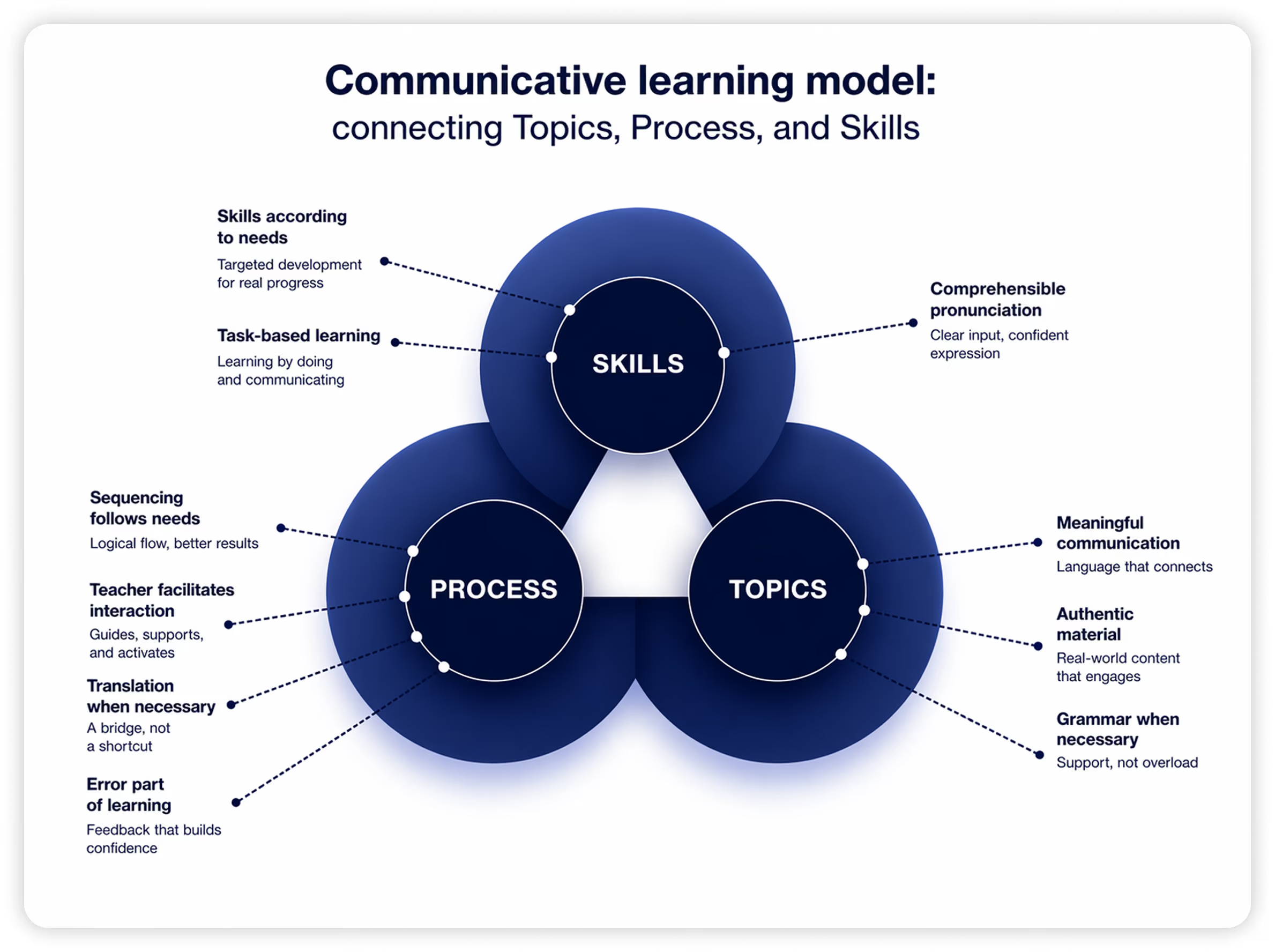
At mYngle, learners do more than study a language. They use it to do real work in live online language lessons, such as clarifying, negotiating, aligning, and deciding. This communicative approach is designed to build job-ready communication skills that transfer directly to meetings, presentations, customer interactions, and day-to-day collaboration.
mYngle combines role-relevant topics, CEFR-aligned outcomes, and task-based practice so learners spend more time actively using language and less time passively absorbing content. Teachers guide interaction, provide targeted feedback, and reinforce accuracy and clarity without losing fluency.
mYngle combines role-relevant topics, CEFR-aligned outcomes, and task-based practice so learners spend more time actively using language and less time passively absorbing content. Teachers guide interaction, provide targeted feedback, and reinforce accuracy and clarity without losing fluency.
Research Foundations
1. Skills are built around real workplace needs and measurable outcomes:
mYngle starts from the learner’s role, context, and baseline level, then sequences lessons toward outcomes that are easy to recognise across organisations. Targets are aligned with CEFR so learners, managers, HR, and L&D share the same definition of progress using CEFR proficiency descriptors.
2. Task-based practice increases learner talking time and accelerates speaking development:
mYngle teachers run outcome-driven tasks rather than open-ended conversation, so learners spend more time speaking to achieve authentic workplace outcomes such as agreeing next steps, handling objections, or giving a status update. This is informed by task-based digital interaction research showing how task design vs. task performance affects negotiation of meaning in online environments.
(Digital Task-Based Language Learning – University of Amsterdam)
3. Meaningful interaction builds learning through negotiation of meaning:
Interaction creates learning opportunities because learners must clarify, repair misunderstandings, and reformulate messages. This negotiation of meaning helps learners notice gaps and adjust their language use in real time. At mYngle, teachers facilitate this interaction, so mistakes become actionable feedback and the next practice target.
4. Pronunciation is taught for intelligibility and comprehensibility:
In global teams, the goal is to be understood clearly across accents. Research shows that accentedness is only weakly related to intelligibility, supporting a focus on intelligible and comprehensible speech rather than accent reduction. mYngle teachers integrate pronunciation practice into real workplace tasks so learners build clarity and confidence when speaking at work. In short, mYngle prioritises being understood.
5. Grammar and translation are used strategically to unblock performance:
At mYngle sessions, a communicative approach does not ignore accuracy. mYngle uses targeted grammar explanations and brief translation support when they improve performance in real tasks. Long-term classroom evidence on explicit vs. implicit instruction in writing shows that different instructional approaches can impact accuracy in specific ways over time.
Implications for HR and L&D

Build job-ready communication by practicing real workplace actions (aligning, negotiating, presenting, handling objections)
Increase learner talking time by using outcome-driven tasks rather than open-ended conversation
Make progress visible in performance terms (what learners can do in meetings, calls, and written communication)
Improve clarity for international collaboration by focusing pronunciation training on intelligibility and comprehensibility
Protect accuracy without slowing fluency by using “just-in-time” grammar and translation support tied to real tasks
Frequently Asked Questions
What can HR and L&D expect when choosing mYngle?
Role-relevant online language lessons built around real workplace tasks, with CEFR-aligned outcomes, a high proportion of active speaking time, and teacher feedback that supports measurable progress and clear reporting.
What is the communicative task-based method at mYngle?
It is learning by doing. Learners complete real communication tasks in live online language lessons, while teachers guide interaction, provide feedback, and focus on key skills so learners improve through meaningful language use.
Is this effective in live online language lessons or only in person?
Evidence from a systematic review of videoconferencing for second-language learning reports positive outcomes for language learning, supporting synchronous online classrooms as a viable format for communicative practice (Yu, 2022).
Does communicative learning ignore grammar and accuracy?
No. Grammar and accuracy are addressed when they improve performance in real tasks, and teachers reinforce precision through structured feedback during and after lessons.


.webp)